In rural houses, the most important piece of furniture was the trousseau chest, in which not only the festive clothes were stored, but also small valuables. The chest also functioned as the cherished decoration of the living room. These chests were brought to the new husband's house as a dowry and were held in high esteem. There are two types of chests: carpentry-constructed and painted chests. Jointed chests were made using carpentry techniques similar to those used in house construction. They often featured geometric, incised decorations. Its planks and posts were cleaved and carved with axes, and the horizontal planks slid into each other like shingles. Painted chests were made from soft wood, mostly pine boards sawn to equal thickness.
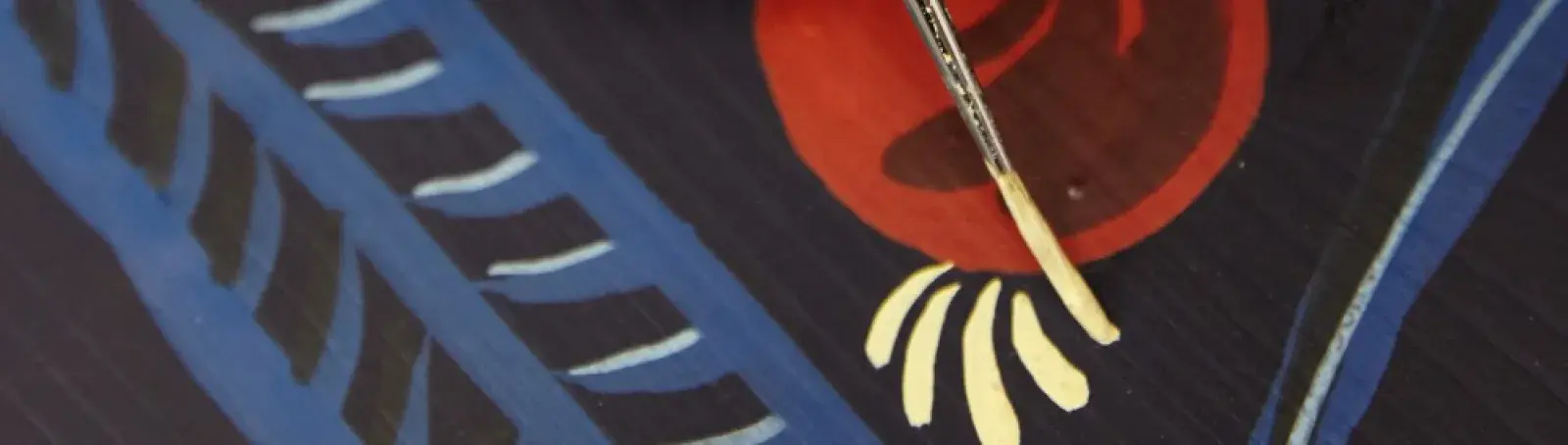
Hungarian folk art, including the patterns of furniture painters, is extremely rich in motifs. The most common is the representation of flowers and plants found locally, but birds are sometimes found among the natural floral motifs surrounded by meandering tendrils too. Roses, lilies and tulips are especially popular motifs. This is how the term tulip chest (or tulipános láda in Hungarian) came to refer to painted trousseau chests adorned with tulip patterns. Furniture decorators were often referred to as the “flower-painting joiners”, who would paint the designs with their free hand, and sold their richly ornamented furniture and chests at fairs.
In Harta, a village in the Sárköz region, the painted furniture reflects a strong sense of decorative refinement, while also bearing traces of Swabian traditions. This influence is rooted in the 18th century, when German settlers arrived in the area. Until the mid-20th century, in addition to the chest, it was customary for newly-weds to receive a full set of furniture (kitchen and room furniture) decorated with painting.
From our collection, we selected a piece decorated with the distinctive painted motifs of Harta for this exhibition. And if you open the jointed chest on display, you can pick up and explore various items traditionally included in a bride’s trousseau.
Game descriptions:
Robbers and cops in pairs
Take turns placing your pieces on the board. Then take turns moving them—always to an adjacent empty square. The winner is the player who blocks the other from making any more moves.
Jigsaw puzzle
Recreate the painted design by fitting the pieces together.