In 2002, Gábor Mihályi became the artistic director of the Hungarian State Folk Ensemble. Under his direction, the ensemble's artistic work received a new impetus: he upheld tradition while also striving for modernity and relevance.
This clear artistic vision, paired with the creators' and performers' energy, endures today. As a result, the company stands as a leading workshop of modern folk dance theatre internationally.
Since 2001, the ensemble has operated in the Hungarian Heritage House, where artistic work is closely tied to folk music and dance research and public cultural activities.
Gábor Mihályi as artistic director
In May 2002, after Ferenc Sebő became professional director of the Hungarian Heritage House, Gábor Mihályi—a former solo dancer and renowned choreographer—became artistic director.
Mihályi's career was closely related to that of Sándor Timár: he became his student as a child, and in 1982, he was invited to join the company.
Later, however, he set off on his own artistic path:
He stated, "I have been Timár's student since I was fourteen. My first choreographies were created in my master's style. Later, however, I felt that dance could express not only the harmony of music, space and movement, but also deeper human feelings."
His first choreography for a large ensemble, the show Régen volt, soká lesz (It Was Long Ago, It Will Be A Long Time), simultaneously concluded the Timár era and opened a new chapter in the ensemble's history.
Repertoire expansion and genre opening
Following Sebő’s ideas, Mihályi sought to expand the repertoire and engage young artists.
Consequently, alongside traditional folklore performances, new productions emerged:
Historical and thematic performances
- Ütik a rézdobot (Beat the brass drum) (1998)
- Táncos magyarok (Dancing Hungarians) (2000)
- Verbunkos (Verbunk) (2003)
These works examined the historical layers of Hungarian dance culture, typically situating folk dance within a musical or cultural-historical context.
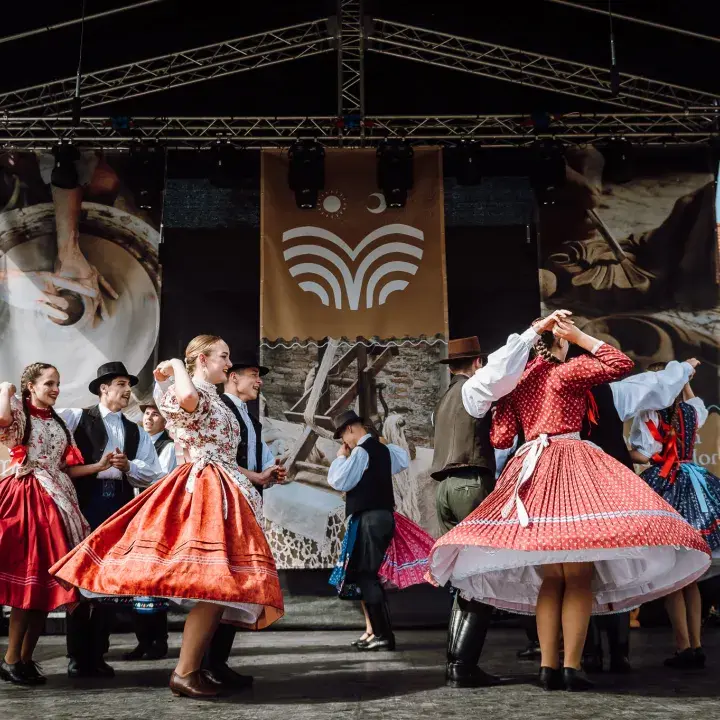
In parallel with these historical and thematic performances, new directions emerged: folk dance theatre productions with modern scenic designs that preserve authentic forms, and spectacular folk dance concerts aimed at broader audiences.
Mihályi's artistic credo was clear:
Let’s not mix genres or sell authentic folk dance as a revue. Instead, let each genre appear in its own form. Expand the audience and win over the youth.
Tradition and modernity
Tension between traditional and modern stage forms has long shaped Hungarian stage folk dance, driven by debate and differing artistic views.
The novelty at the beginning of the 2000s was that the professional ensemble with privileged status – the Hungarian State Folk Ensemble – consciously went for renewal. The new artistic direction opened up Bartók's idea – the idea of a "pure source" to stage forms of the 21st century.