In the second half of the 1960s, Miklós Rábai entered the final creative phase of his career. His works continued to be defined by the need to stage Hungarian folk tradition, but at the same time, more and more controversy surrounded his choreographies.
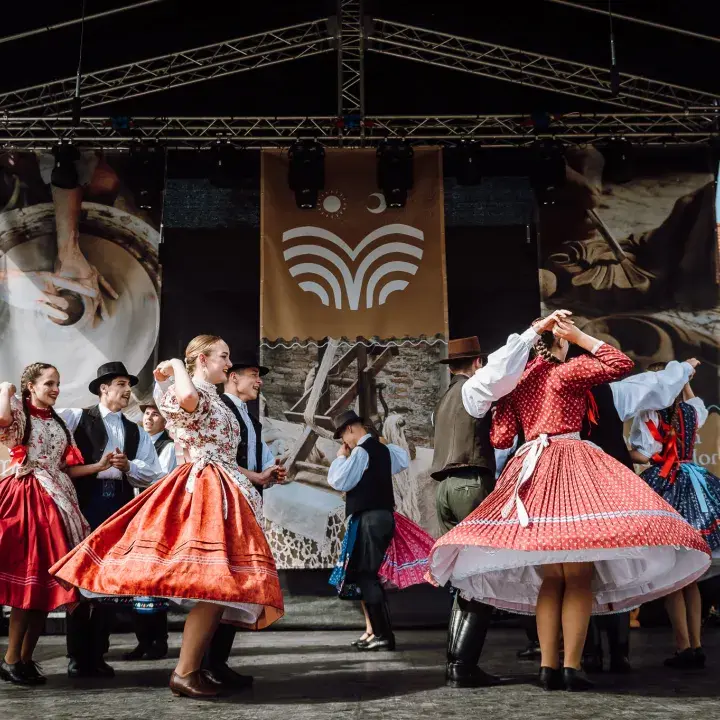
In 1965, he staged the folklore of Hungary's ethnic minorities in the show Hétszínvirág (Seven-Coloured Flower), while using the previously established trio form. Three years later, in 1968, the compilation Rhapsody presented a selection from the company's previous shows: sixteen vocal, instrumental, and dance pieces showcased the diversity of Hungarian folk dance. One of the highlights of the show was the Hungarian gypsy dances completed in 1954.
The show sparked lively professional debate. The forms applied to the main stage, the depiction of Roma dances, and the improvisational nature of solos and doubles repeatedly prompted questions about authenticity. Rábai clarified that the dancers not only learned the movements but also engaged with the original contexts and cultures of the communities represented.
The production of Magyar századok (Hungarian Centuries) was staged in the same year and sought to recall Hungary's past centuries through folk traditions, written and pictorial sources, and various musical styles. The choreographer of the fifteen-part show was Dezső Létai.
In 1969, Jeles napok (Days of Celebration) presented folk customs for all twelve months. The performance emphasised accessibility, playfulness, and audience involvement, highlighting the festive, communal spirit of folk tradition.
In 1970, the production Utak (Ways) signalled Rábai's renewed focus on agitprop and history. The performance evoked post-Liberation events by reviving works such as Latinka ballada (The Ballad of Latinka) and Hajnalodik (The Dawn is Rising). The play premiered during the Buda Youth Days festival.
The production of the following year, entitled Tiszán innen, Dunán túl (Near to the Tisza, Far from the Danube), was created specifically for the audience of village cultural centres. The company, divided into two groups, travelled around the country with parallel tours. However, the production received sharp reviews: many considered it a step back in terms of artistic quality.
Throughout these final years, Miklós Rábai's work was marked by experimentation, redefining tradition and an emphasis on viewer experience. At the same time, his works often provoked professional debates over authenticity, scenography, and the representation of society.
In 1974, Miklós Rábai died of a serious kidney disease at the age of 53. In the last months of his life, he also managed the affairs of the community that he had created: the Hungarian State Folk Ensemble.