Research on Hungarian folk music and folk dance began at different times. Zoltán Kodály and his colleagues systematically collected and categorised folk songs from 1905 onwards, long before the intensive scientific collection of folk dance began. Because of this, the first generation of choreographers in the 1950s could rely only on a limited number of authentic traditional dance sources.
During this era, artists often worked from incomplete documentation. The world-renowned folk dance archive, assembled only in the 1970s, primarily benefited the second generation of choreographers.
Miklós Rábai’s accomplishments clearly exemplify the position of the first choreographers. For the stage version of Kállai kettős (Double Dance of Kálló), he only had access to a three- or four-minute-long silent footage from the mid-1930s. While the musical material was rich, since Kodály himself had composed the work for the ensemble, only a fragmentary visual source was accessible from the dance material.
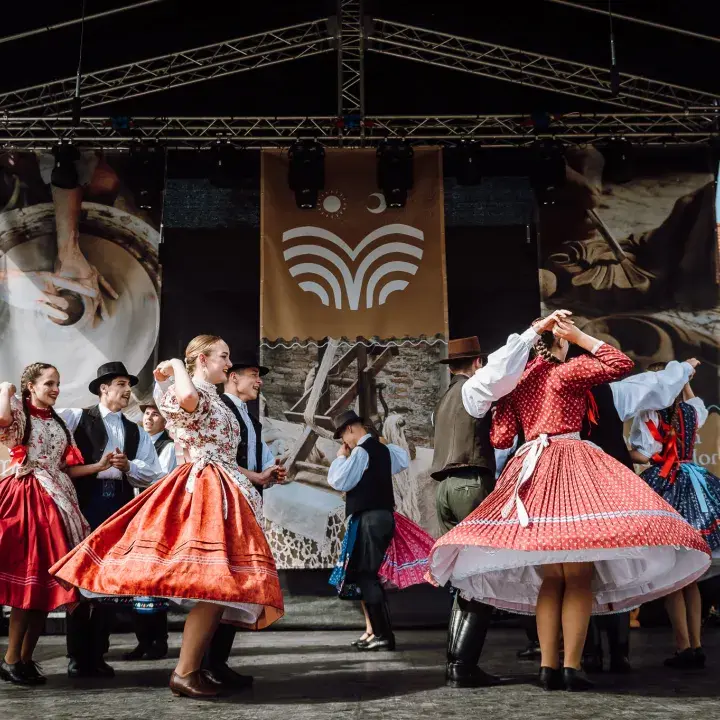
Similar problems arose with other pieces as well. The unique stage structure of the three-jump dance arose from incomplete information about the original dance. The bottle dance created for the female dancers was not tied to any specific ethnographic region.
Consequently, the creators of the period did not merely reconstruct tradition but often creatively developed new stage forms from fragmentary sources.
This situation was later described as follows by Tibor Erdélyi:
"We should not expect Miklós Rábai to present the purity of the Kalotaszeg lads' dance... he could teach fragments. Still, we were proud of him. You can't expect Mór Jókai to have Esterhazy's literary virtues.”
The work of the early generation of choreographers was thus both traditional and creative experiment: despite the lack of resources, they had to create a new stage language.