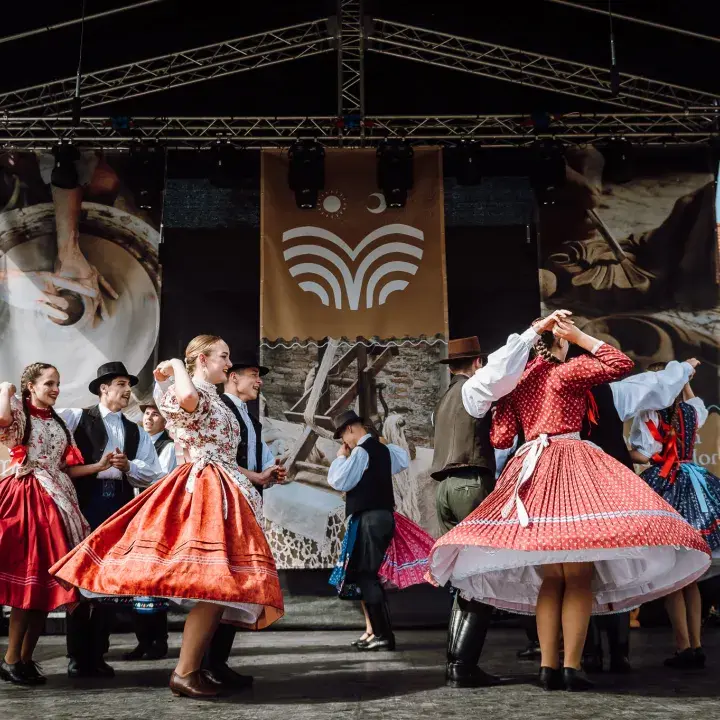
In 1952, the Hungarian State Folk Ensemble embarked on its first major international tour to the People's Republic of China. The journey itself was remarkable: the ensemble travelled by train for more than a week, and, during long waits at various stations, the dancers often rehearsed their choreographies on the platform.
The Chinese performances aroused enormous interest: in a Beijing stadium, for example, about 100,000 spectators applauded the production. During the trip, ensemble members also met Mao Zedong. The Chinese hosts presented the Hungarian delegation with a richly assembled photo album documenting the tour's events, serving as both a personal souvenir and a diplomatic gift. While the reception was solemn and spectacular, the artists' per diem and salary remained quite low.
However, the significance of the tour extended beyond artistic achievements; it was also closely tied to the political atmosphere of the era. For example, the members of the ensemble visited the exhibition in Beijing that accused the United States of having used biological weapons during the Korean War. Following this visit, the ensemble sent a protest telegram to the Chinese press denouncing the "bacterial war" and the use of weapons against peaceful populations.
The text of the telegram was as follows:
"We, the members of the Hungarian State Folk Ensemble, who have been touring China for two months and who have seen the Beijing exhibition of bacterial weapons used by the Americans, protest against reviving medieval pestilences, using inhumane means to destroy millions of peaceful people. We protest against violations of international conventions and stigmatise those who use science, the achievements of mankind, to destroy millions. We protest against the bacterial bombs.”
Ultimately, this declaration reflects the political language of the early 1950s Cold War, when cultural delegations often played diplomatic and ideological roles. In this way, the Chinese tour was not only the international debut of Hungarian folk dance, but also an imprint of the era in which art, politics and international relations were closely intertwined.