We bring You collections, decade-long recordings and archive material that is still very much relevant today; and dancers who continue to inspire us. We would like to present our favourite recordings: explain the inspiration and story behind our choreography.
Storyteller(s):
János Lőrincz (Szépkenyerűszentmárton, 1999)
Szépkenyerűszentmárton is a township located 15 kilometers from Szamosújvár, nestled in the northwestern hills of the Transylvanian Plain (Mezőség), on the border between Kolozs and Beszterce-Naszód Counties in Romania.
Collected by:
Sándor Varga
Featured in the private collection of Sándor Varga, as well as the folk database, collected on January 31, 1999.
Performed by:
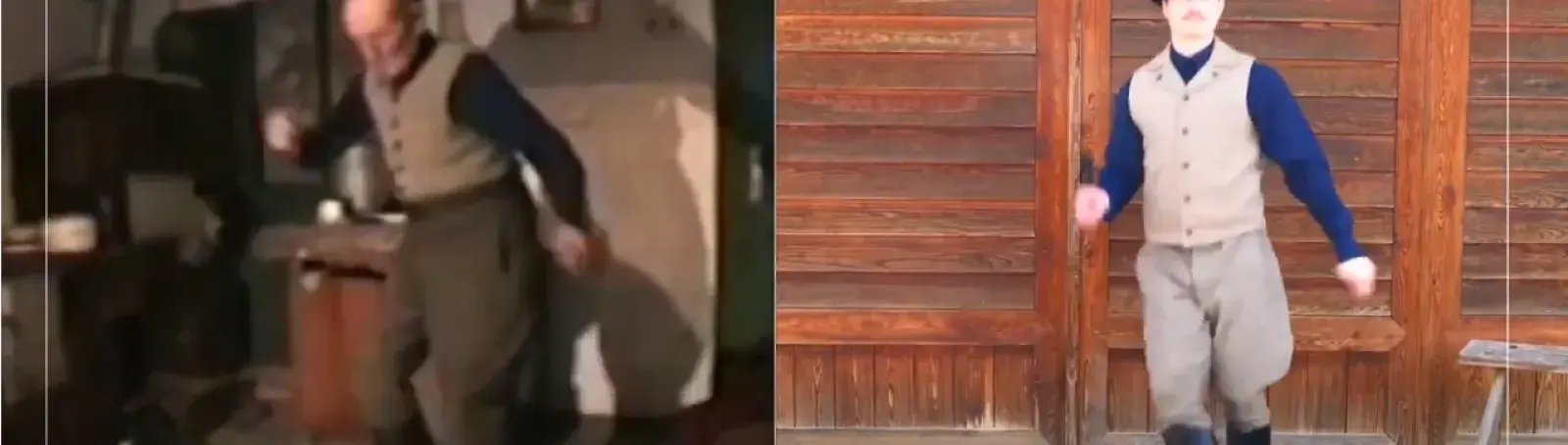
Márton Opiczer, laureate of the Golden Spur award (Aranysarkanytús) (Etyek, 2020)
Having worked on the Szépkenyerűszentmárton dances for approximately six months, this is the first time I decided to feature them. Despite living to a ripe age of 95 (1916-2011), I did not get the chance to meet the storyteller. The unique and complicated style of János Lőrincz (Master of Folk Art, 2006) has captivated me. The routines are composed of strict and powerful quick slaps, yet they manage to seem effortless. His dances put a spell on me.