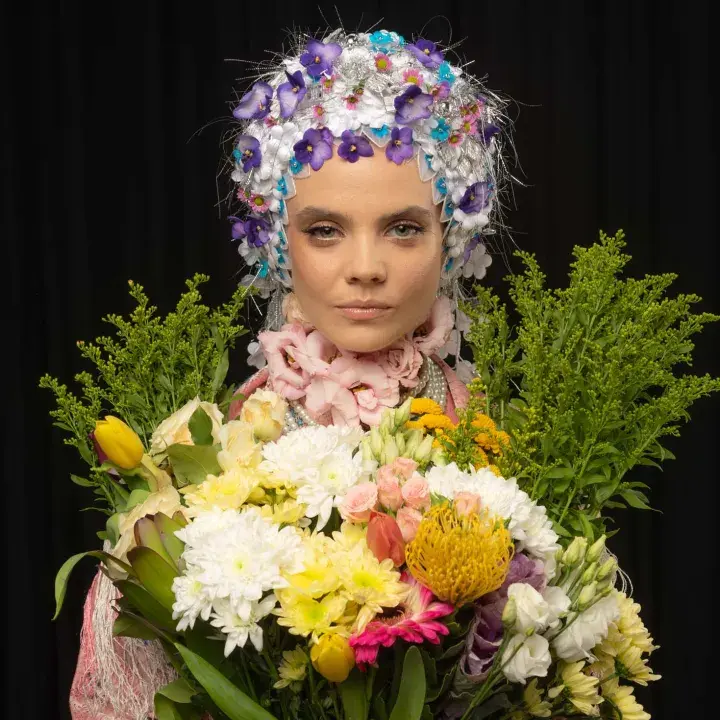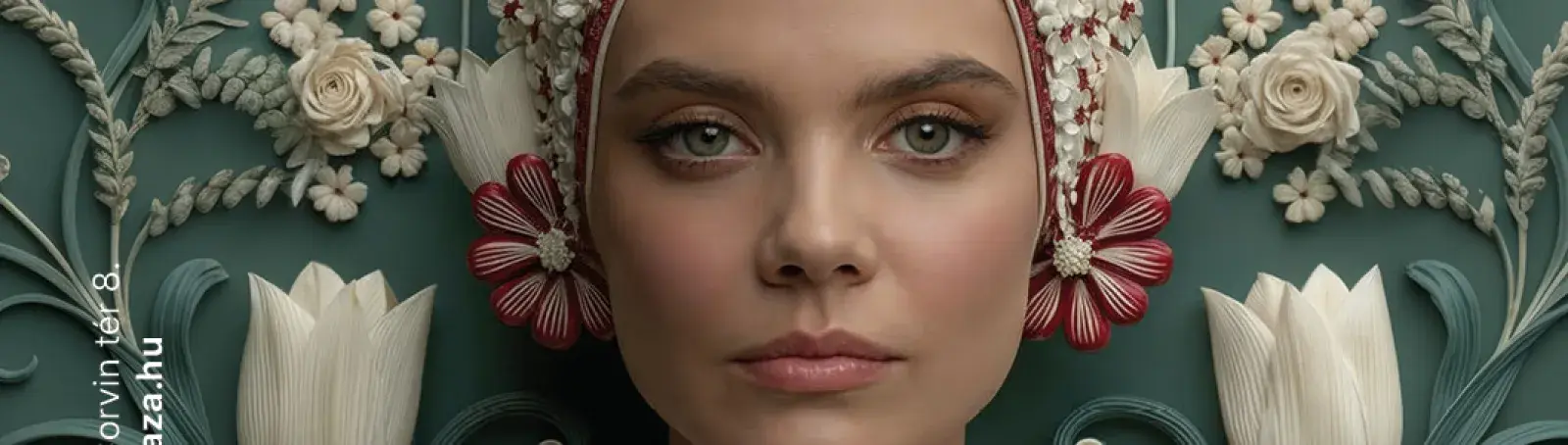
Exhibition of gardens and flowers in the language of folk art
Flowers in the garden. Flowers in embroidery. Flowers in memory. The encounter between nature and culture is concealed in every petal of Hungarian folk art.
Let us envision ourselves retreating into a quiet corner of nature, let's say, a garden, where the noise of the world no longer dictates our thoughts. In this peaceful, attentive silence, body and soul come to relax. As we immerse ourselves in this presence, the concept of time slowly loses its meaning. Then, we not only contemplate nature – we become part of it. This is a self-evident, rare, yet deeply familiar state for us, modern people: total immersion - the flow.
Jean-Jacques Rousseau (1712-1778) was a French–Swiss philosopher, writer, and composer. He was an influential thinker of the Enlightenment. His motto, "Back to nature!" was a criticism of the Enlightenment. Rousseau believed that civilisation's progress alienated man from his natural state, which was freer, happier, and more moral. For Rousseau, nature offered not just refuge, but also moral purification. His love of plants was deeply romantic; many works feature his botanical walks, during which he found harmony and tranquility. For him, retreat to nature meant a spiritual and moral rebirth.
Depictions of flowers and plants are not just decorative motifs; they reflect the community's worldviews, beliefs, and rhythm of everyday life. Their immediate experience of the environment - the shapes of the flowers of the village gardens lives on in the art motifs, but at the same time, the influence of different horticultures can also be detected in them. The ornamental plants of Renaissance and Baroque gardens, the medicinal herb gardens of monasteries, and even the flower gardens of the urban bourgeoisie all enriched the motif repertoire of traditional folk art. Thus, traditional rural garden culture did not function as a closed system, but as an inclusive and transformative medium: the traditional floral motifs were accompanied by new forms, colours, and connotations, which also appeared in embroidery, carvings, and painted furniture.
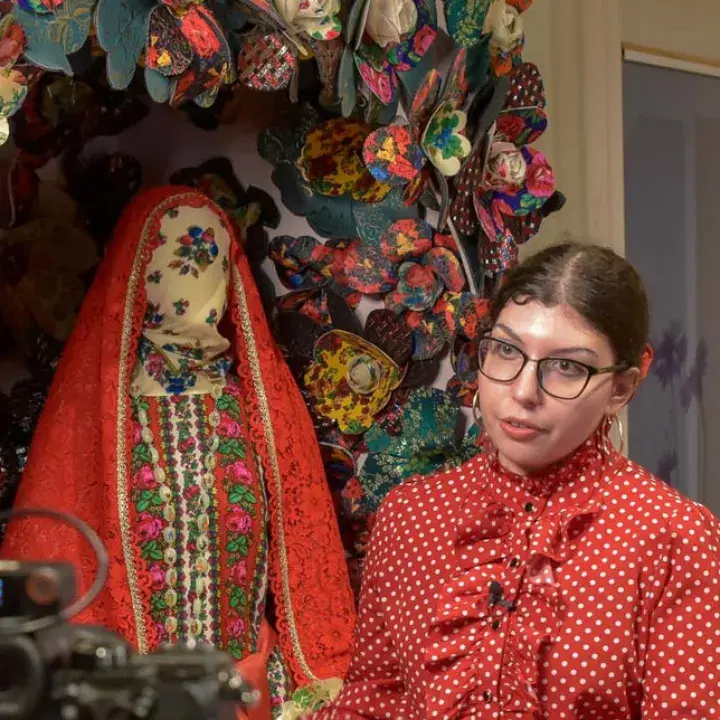
Spanning five centuries, the exhibition features about 120 objects connected by nature motifs. Visitors can feel the "aromatic" past of floral and plant-patterned clothing, furniture, and ceramics.
What does the concept "museum cure" mean?
Did you know that in many Western European countries, doctors are now prescribing visits to museums? What happens in the brain when the beauty of an artifact moves us? How do well-being and mindful slowing down manifest in an exhibition space? Museums no longer only preserve culture; they also play an increasingly important role in immunity, care, and community resilience. We explore these questions as we consider how museums can offer relaxation for both body and soul.
By relying on ancient knowledge and practices, we can always renew ourselves. Our exhibition presents man's relationship with nature through ceramics, textiles, folk attire, furniture, and other carved artefacts.
Exhibition details
Curator of the exhibition: Dr Szilvia Czingel
Co-Curators: Krisztina Üveges, Emőke Nánássy
Exhibition opening: 4 February 2026, 5 pm
Tickets purchased entitle you to enter the exhibition once between 5 February and 30 November 2026, from Tuesday to Sunday, between 10 am and 6 pm. With the entrance ticket, you can also visit the permanent exhibition "Scents, Flavours, Shapes" at the Hungarian Heritage House.
You can also purchase a discounted combination ticket that includes admission to our three exhibitions: Tulips & Sage, From Play to Craft, and Scents, Flavors, Shapes. The combined ticket is valid from June 12 through September 20, except from July 20 through August 3, when the building is closed. You can find more information about the combined ticket here.
At most, 20 people can be in the room at a time!
Guided tour
We also organise special guided tours for the exhibition on pre-announced dates, which can be attended with an additional ticket of 1000 HUF. More information about the benefits of guided tours and the planned dates can be found here.
Cloakroom use
Please note that cloakroom use is free and mandatory for security reasons. Please leave your luggage, umbrella, and bag larger than 30 cm (long) x 25 cm (high) x 15 cm (wide) in the cloakroom. No bags of any size can be worn on your back, and small backpacks can only be worn in front or in hand. If you wish to have a jacket with you, it must be worn; it cannot be carried on your arm or shoulder. If you don't wish wear your jacket, please put it in the cloakroom. In addition to the above, it is forbidden to bring bottles, food, drinks, children's toys, or anything else to the room that could jeopardise the condition of the artworks.
As part of the exhibition concept, scent diffusers are in operation in the exhibition space, releasing essential oils into the air in very small quantities (estimated concentration: ~0.03–0.08 mg/m³).
Please be aware that if you are allergic or sensitive to the scents of LAVENDER, ROSEMARY, LEMONGRASS, and LEMON VERBENA, and if even the low concentration described above may cause you problems, please avoid entering the exhibition space or limit your time there.
Illatos terek és ősi tudás a népművészetből
120 népművészeti tárgy, kerámiák, kézimunkák, textilek bemutatásával vizsgálja a Hagyományok Háza új, Tulipán & zsálya – Kertek, korok, népművészet című kiállítása a hagyományos, népi kultúra növénymotívumait.
Létezik gyógyító múzeum?!
Két új időszaki kiállítással indítja az évet az idén 25. évfordulóját ünneplő Hagyományok Háza. Az Intézmény jubileumi programjainak sorában a két új időszaki kiállítás a természethez való viszonyt, a népművészet gazdag örökségét a kortárs gondolkodás kérdéseivel kapcsolják össze.